
More Than Concord Country
The Lake Erie grape belt runs along the southern shore of the lake through Pennsylvania, Ohio, and western New York. It is one of the largest grape-growing regions in the country, and for more than a century it was known for one thing: Concord and Niagara, the sweet juice grapes that built the local industry and still fill the trucks every fall.
That reputation is the region's blessing and its blind spot. The same conditions that make it ideal for hardy juice grapes, a cool climate, a long season, and a lake that refuses to let the vines freeze, turn out to make it quietly excellent for serious wine grapes too. Most people just never looked.
What The Lake Does
Lake Erie Is The Engine.
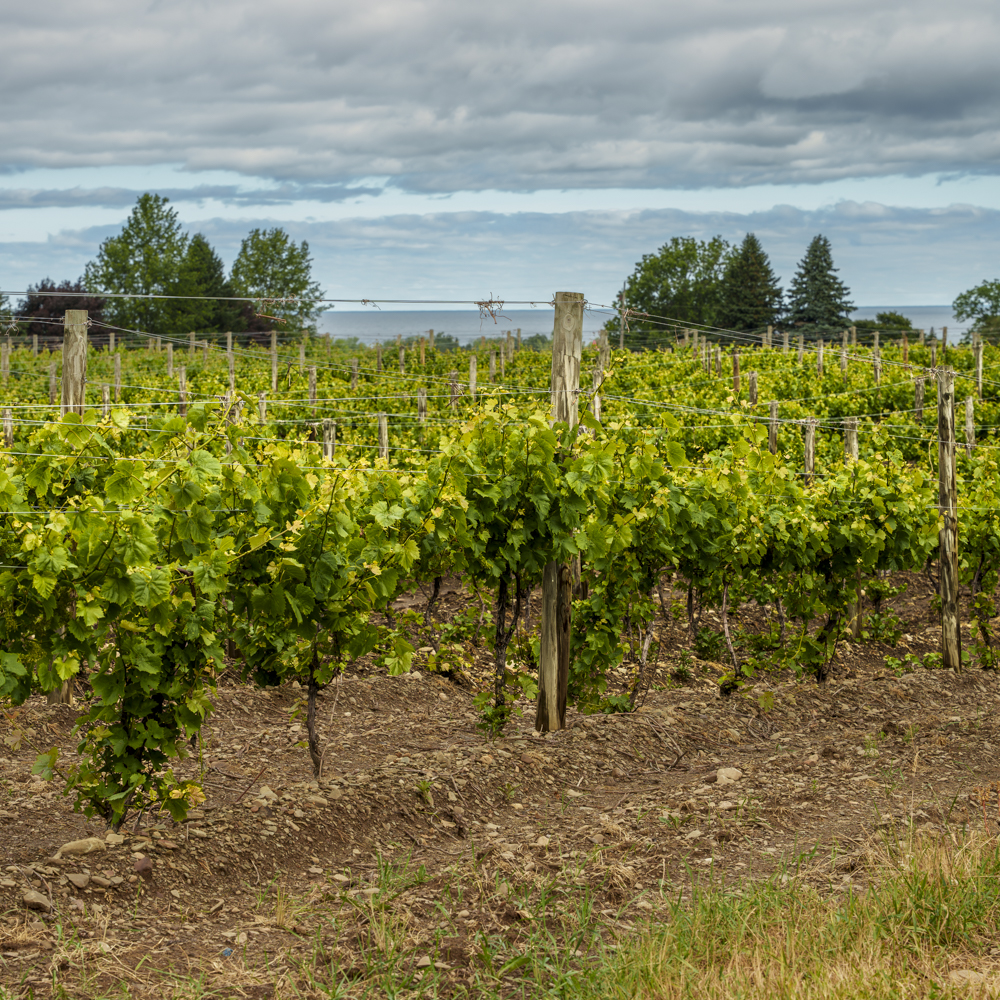
It is shallow enough to warm through the summer and hold that warmth into the fall, which buffers the vineyards against the first hard frosts and stretches the growing season deep into October. For cool-climate wine grapes, that long, slow finish is everything. It gives the fruit time to ripen its flavor while holding onto the bright acidity that warmer regions cook away. The vines sit on well-drained glacial silt-loam soils that run through the bench, ground that drains fast in a wet year and holds water in a dry one, so the fruit stays in balance without irrigation.
Cold that would kill a vineyard elsewhere gets softened here. Heat that would flatten the fruit elsewhere never arrives. The result is a growing window built for exactly the kind of grape most people assume the region cannot produce.
The Proof Is In The Bottle
The clearest answer to the region's reputation is what comes out of it, and some of it starts in Bill's rows.
Mazza's South Shore Wine Company makes The Perfect Rosé from Bill's Chambourcin, grown on his Ripley block. The wine has earned 95 points and a Gold Medal at the 2024 Decanter World Wine Awards, a 93-point Gold at the BTI New York Wine Classic, and Best Rosé at the 2023 Pennsylvania Sommelier Judgment, alongside scores from James Suckling and Tim Atkin. What the judges praised in the glass traces straight back to the vineyard: Chambourcin's bright natural acidity, the backbone of a serious rosé.
Why Bill Grows Here
Bill grew up in the Concord tradition and spent decades in it before he began converting rows to Riesling, Pinot Gris, and hybrids like Frontenac and Chambourcin. Neighbors thought he was reaching. Forty-plus years in, the fruit has settled the argument. He farms this ground for the same reason he started: it grows better grapes than people give it credit for, and now there are medals to prove it.