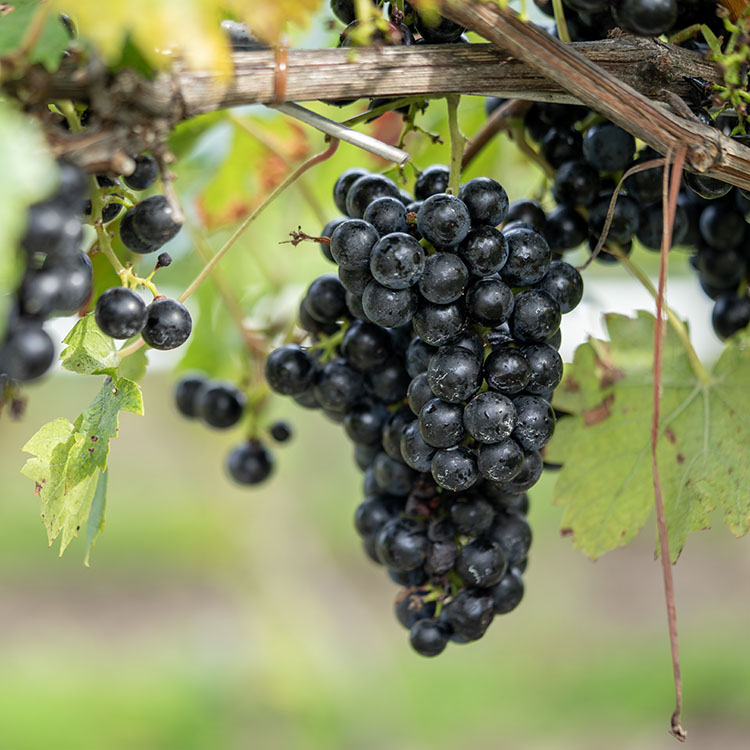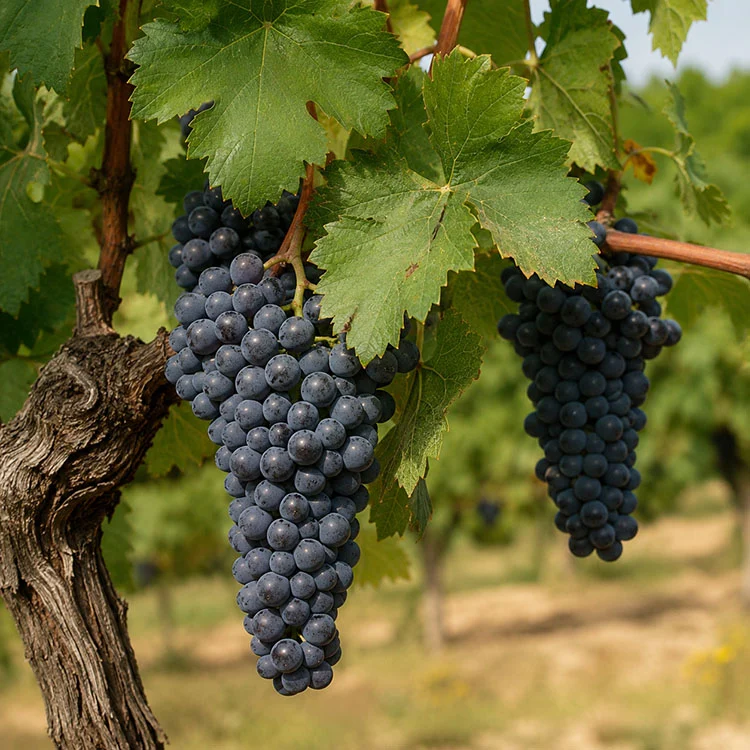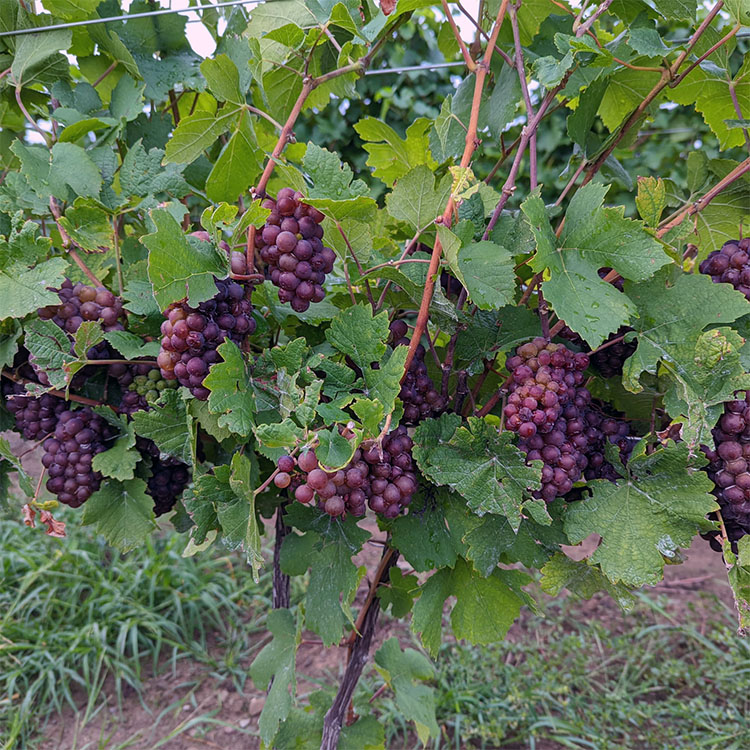
Chambourcin Wine Grapes
June 3, 2026
Pinot Gris Wine Grapes
June 3, 2026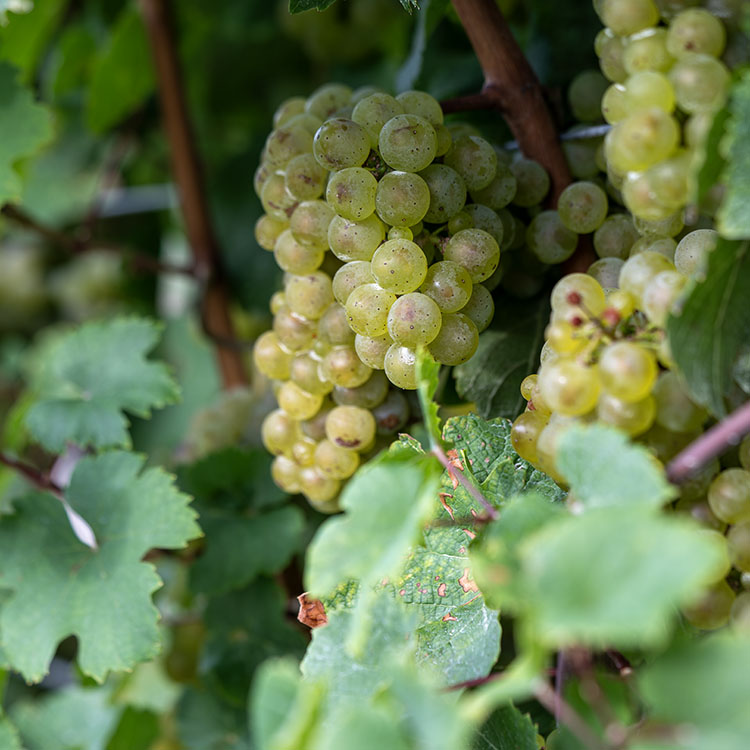
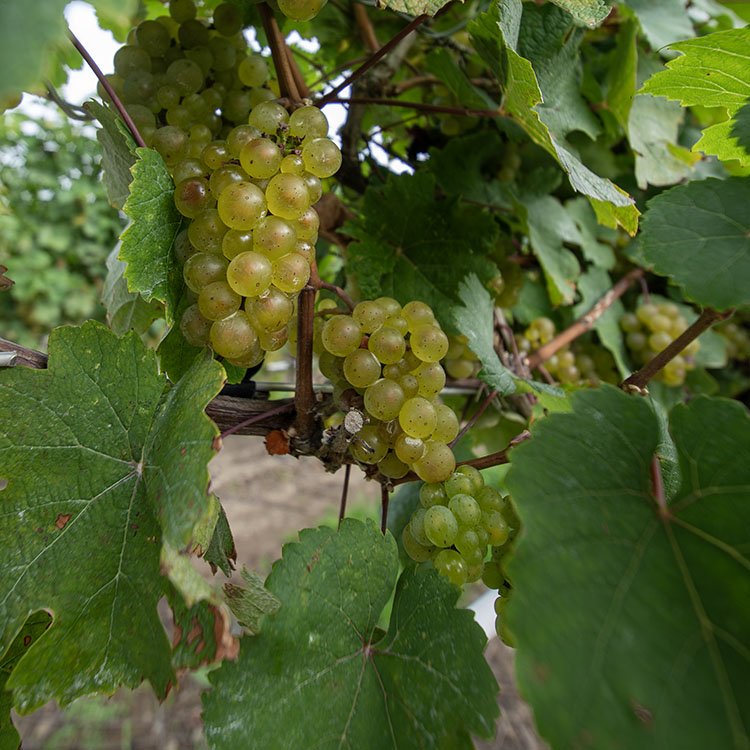
Riesling Wine Grapes
Why buy from our farm
- Mature vines, not young-vine dilution.
- Five clones to blend from or single out.
- He will move the pick window within reason to hit your Brix and pH. You are buying fruit farmed toward your spec, not just his.
- Dry-farmed, IPM, canopy worked by eye and not by habit.
- Around 45 tons available for 2026, bulk quantities, multi-year contracts on the table.
- Pickup at the vineyard, with help sorting logistics.
Pricing available on request.
The grape
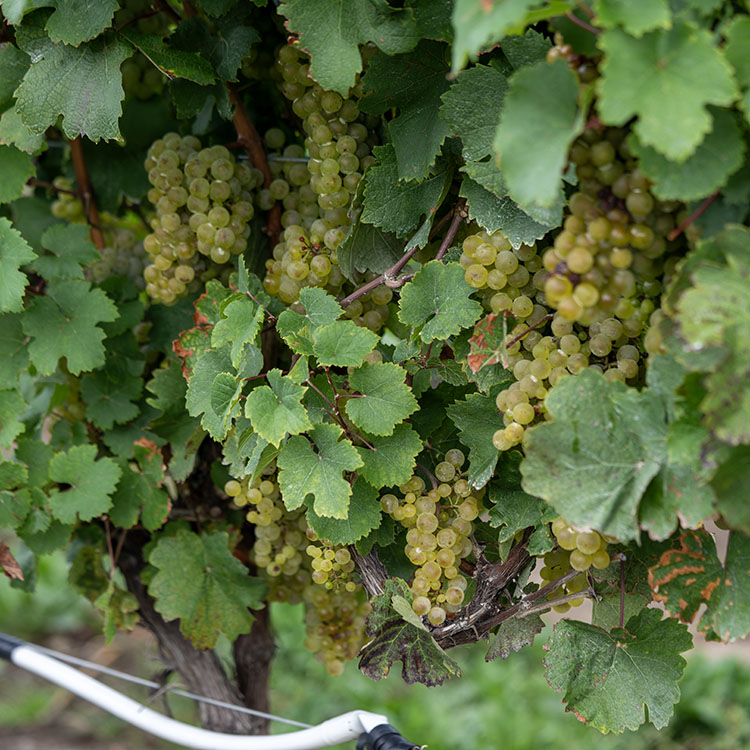
Riesling is the cool-climate white that holds its acid. Aromatic, high-tension, and honest about where it comes from. The same fruit makes dry, off-dry, sweet, sparkling, and ice wine, and it ages better than almost any white in the ground. Winemakers reach for it because it does most of the work in the vineyard and asks for very little in the cellar.
Where it grows
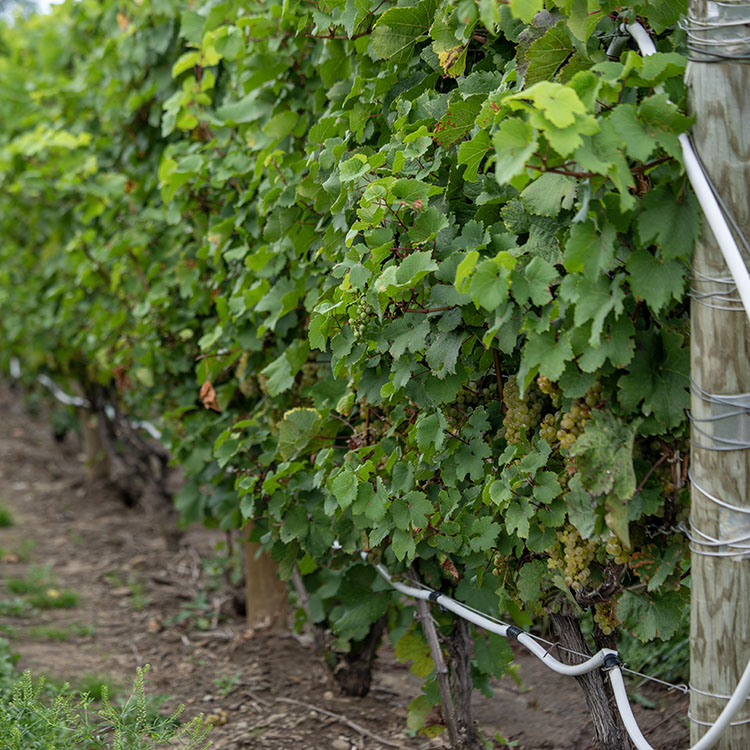
Hammond Road sits on a gravel bluff about a mile back from Lake Erie. Close enough for the lake to buffer the winter and stretch the season. Far enough back to ripen ahead of the fruit sitting right on the water. Rows run north to south along the I-90 corridor, which pulls cold air off the site and dries the canopy after rain. The gravel drains hard. Between the air movement and the drainage, disease pressure stays low without leaning on the sprayer.
How Bill grows it
Nine acres of Riesling planted in waves from 2008 to 2014, so the vines are mature and settled. Five clones across two rootstocks, which is unusual and gives a buyer real range inside one variety. VSP trellis, cordon-trained, dry-farmed start to finish. The vines find their own water, which keeps vigor down and flavor up. The spray program is IPM, not calendar spraying. Leaves come off mechanically at pea-berry size to open the fruit zone for airflow and coverage. Harvest is mechanical, so when the numbers are right the fruit moves fast.
Why winemakers want it
Cool-climate Riesling is in short supply and steady demand, and most of what exists at volume is a long haul from a winery in PA, NY, or OH. This is quality fruit at scale, close to home.
The proof is in how little the acid moves. Across five vintages, pH averaged 3.16 and never left the low 3s, running from 3.06 to 3.32. TA held high the whole way, averaging 7.8 g/L across a 6.8 to 9.3 range. That is the tension you buy cool-climate Riesling for, and this ground holds it year after year, wet vintages included.
Brix is where you get a say. It has averaged 20.2 and reached 23.1 in a strong year, but the number is a pick decision, not a ceiling. Bill sets the harvest date to your target, not his.