Itasca Wine Grapes
June 3, 2026
Cabernet Franc
July 6, 2026
Frontenac Wine Grapes
Deep-color, high-acid Frontenac from a cool Ripley slope. Purpose-built fruit for rosé, port-style, and off-dry reds, with volume (1 ton minimum) for 2026.
Why buy from our farm
- Mature, eleven-year-old vines farmed dry, IPM, on a slope built to dry out fast.
- Intense color and very high natural acid, purpose-built for rosé and fortified styles.
- A grower who works the pick hard, from bright and high-acid to 30-Brix dessert fruit, to hit your target.
- He will move the harvest window within reason for your Brix and pH. You are buying fruit farmed toward your spec, not just his.
- Around 20 tons available for 2026, with multi-year contracts on the table.
- Pickup at the vineyard, with help sorting logistics.
Pricing available on request.
The grape
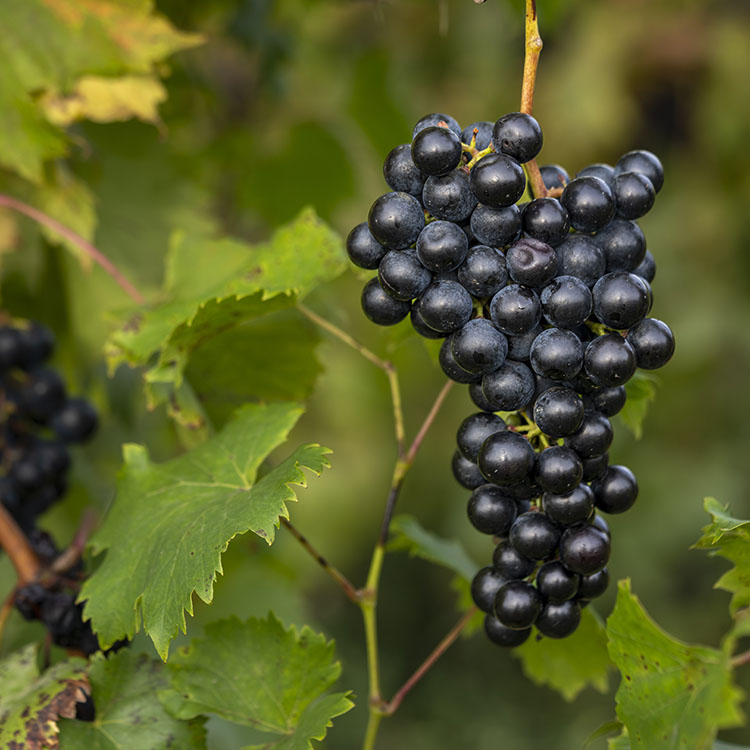
Frontenac is a cold-hardy red hybrid from the University of Minnesota, bred to survive brutal winters and still make serious wine. It brings intense dark color, bold cherry and black fruit, and very high natural acidity. That acid is the whole story. It is the trait a winemaker has to plan around, and the reason Frontenac excels in styles where acid and sugar work together: rosé, port-style and fortified reds, and off-dry or sweet reds. Grown well and pointed at the right style, it makes wine with real intensity that a straight dry red from a marginal climate cannot touch.
Where it grows
The block sits on a north-facing slope in Ripley, New York, about 1.6 miles off Lake Erie. The lake buffers the season and the north pitch drains cold air downhill and off the vines, cutting frost risk and drying the canopy after rain. For a hardy, disease-tolerant variety, that airflow keeps inputs low. The site also gives Bill something valuable: a long hang. He can leave the fruit out into late October and push ripeness hard, which is exactly what the high-sugar styles need.
How Bill grows it
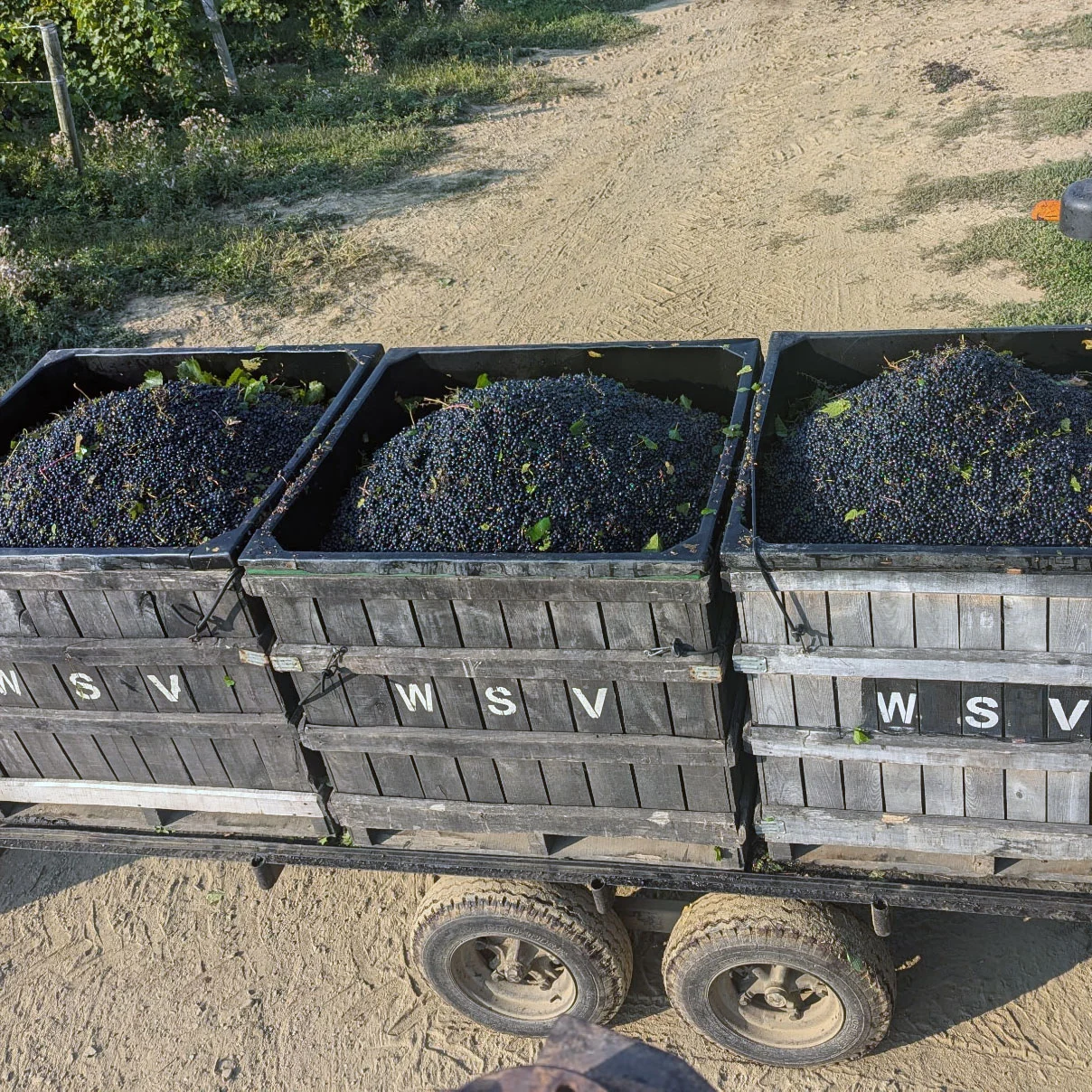
Three and a half acres planted in 2015, so these are settled, mature vines at eleven years. Two-wire cordon, dry-farmed start to finish, on an IPM spray program. Leaves come off mechanically once the berries have set to open the fruit zone for airflow and even ripening. Harvest is mechanical, typically early October, but Bill adjusts the pick hard for this grape. He will bring it in earlier for a brighter, higher-acid style, or hang it to as much as 30 Brix for fortified and dessert fruit. Frontenac gives him that range, and he uses it.
Why winemakers want it
Frontenac delivers something most Eastern fruit cannot: deep color and towering natural acid on the same vine, at real ripeness. For a winery making rosé, that acid is backbone and the color is a gift. For port-style, fortified, or off-dry reds, the high sugar and high acid balance each other in a way that is genuinely hard to source. Across five vintages the fruit came in ripe every year, Brix from 21 to nearly 25, with the option to push higher. This is a grape you buy on purpose, for a specific wine, and this block grows it about as well as the region allows.